
London Photographer Guide: Expert Tips for Stunning Shots 2026
London is a city where every street tells a story, waiting for your lens to capture its unique energy. Whether you are a seasoned local or visiting for the first time, the capital offers endless opportunities for creativity and inspiration.
This 2026 guide is designed to help any london photographer master the art of shooting in one of the world’s most photogenic cities. Inside, you will discover expert tips, iconic locations, practical gear advice, and essential etiquette for unforgettable images.
Ready to elevate your skills? Dive in and start planning your next London photography adventure today.
Essential Gear and Preparation for London Photography
Mastering the art of being a successful London photographer starts with the right preparation. From camera bodies to the smallest accessory, every choice impacts your ability to capture London’s diverse scenes, no matter the weather or time of day.
Camera and Lens Choices for Urban Versatility
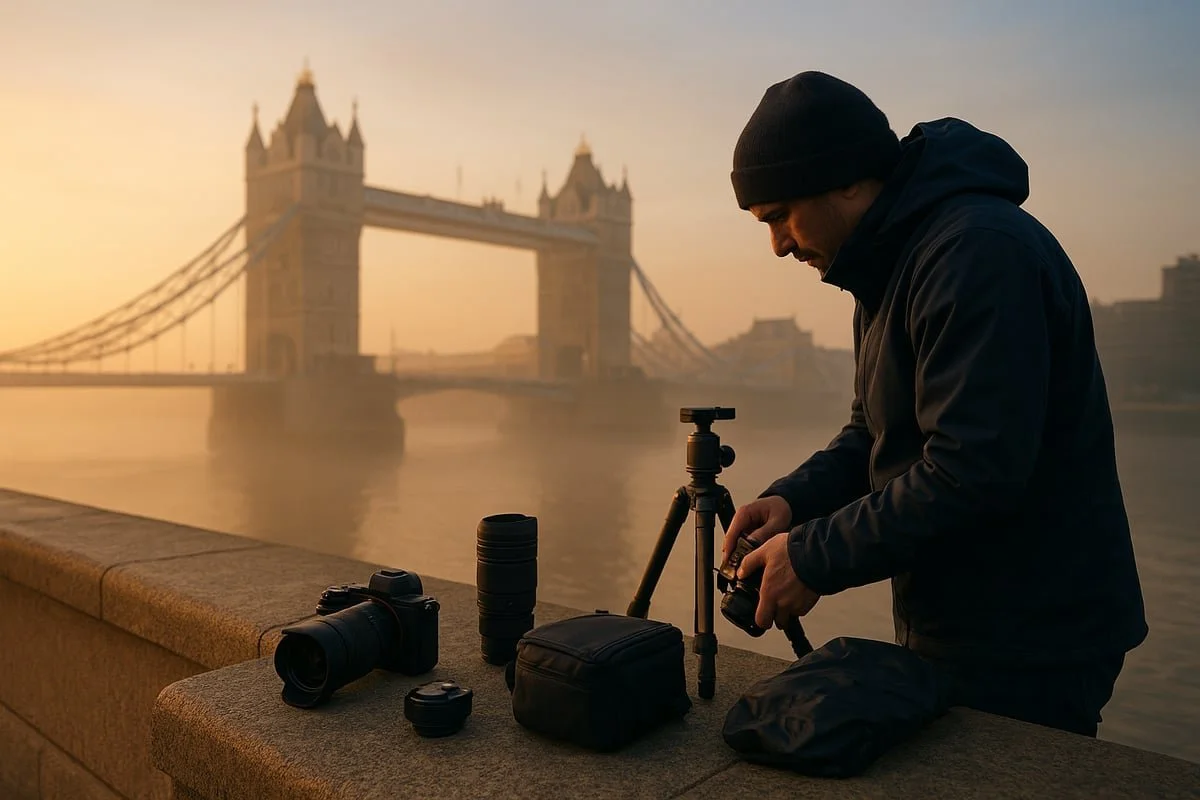
Choosing the right camera is essential for a London photographer aiming to adapt to the city’s ever-changing conditions. Professionals frequently use full-frame DSLRs and mirrorless cameras, such as the Canon EOS 5D Mark IV, Sony A7R III, and Nikon D850. These models offer superior low-light performance, a key advantage in London’s variable lighting.
A versatile lens kit is also crucial. Wide-angle lenses (16-35mm) excel for cityscapes, while 35mm or 50mm primes are perfect for street and portrait work. Weather-sealed gear is highly recommended, protecting your investment from sudden showers or drizzle. Recent surveys show over 60% of professional event photographers in London prefer full-frame systems for their flexibility and resilience.
Packing Smart: Accessories and Essentials
A well-prepared London photographer always packs thoughtfully. A sturdy tripod is invaluable for night scenes or architectural shots, helping you achieve sharp results during long exposures. Filters, such as ND and polarisers, allow creative control over reflections and manage bright skies or glass surfaces.
Portable lighting and reflectors help manage unpredictable light, especially in shaded streets or cloudy parks. Always carry spare batteries and memory cards, as full-day shoots can quickly drain your resources. Rain covers and microfibre cloths are essential for keeping your gear safe and clean during wet weather, ensuring you never miss an opportunity.
Planning Your Shoot: Timing, Light, and Weather
Successful London photographer sessions depend heavily on timing and light. Early morning and late evening, known as golden and blue hours, offer the softest and most flattering light, reducing harsh shadows and crowds. For example, Tower Bridge is particularly striking at sunrise, when you can capture both the architecture and a tranquil atmosphere.
London’s frequent cloud cover can be used creatively to produce moody or dramatic images. Use weather apps and tide charts to plan riverfront or skyline shots effectively. Notably, 70% of professional shoots in London are scheduled around sunrise or sunset to maximise natural lighting and achieve the best possible results.
Legal and Practical Considerations
Before heading out, every London photographer must be aware of legal requirements. Permits may be needed for commercial shoots in public spaces, and drone use is tightly regulated, especially in central areas. Always respect privacy and property rights, as many museums and markets restrict tripod use or professional equipment.
For detailed guidance on when and where permits are required, consult the Film and photography permissions in the City of London resource. Staying informed about these regulations not only protects you but also ensures a smooth, respectful workflow throughout your shoot.
Iconic London Photography Locations and Hidden Gems
London offers an endless array of photogenic scenes for every london photographer. From world-famous icons to secret corners, each neighbourhood presents unique visual stories. The city’s ever-changing light and vibrant street life provide endless creative opportunities, whether you are capturing panoramic skylines or intimate details.
Classic Landmarks for Timeless Shots
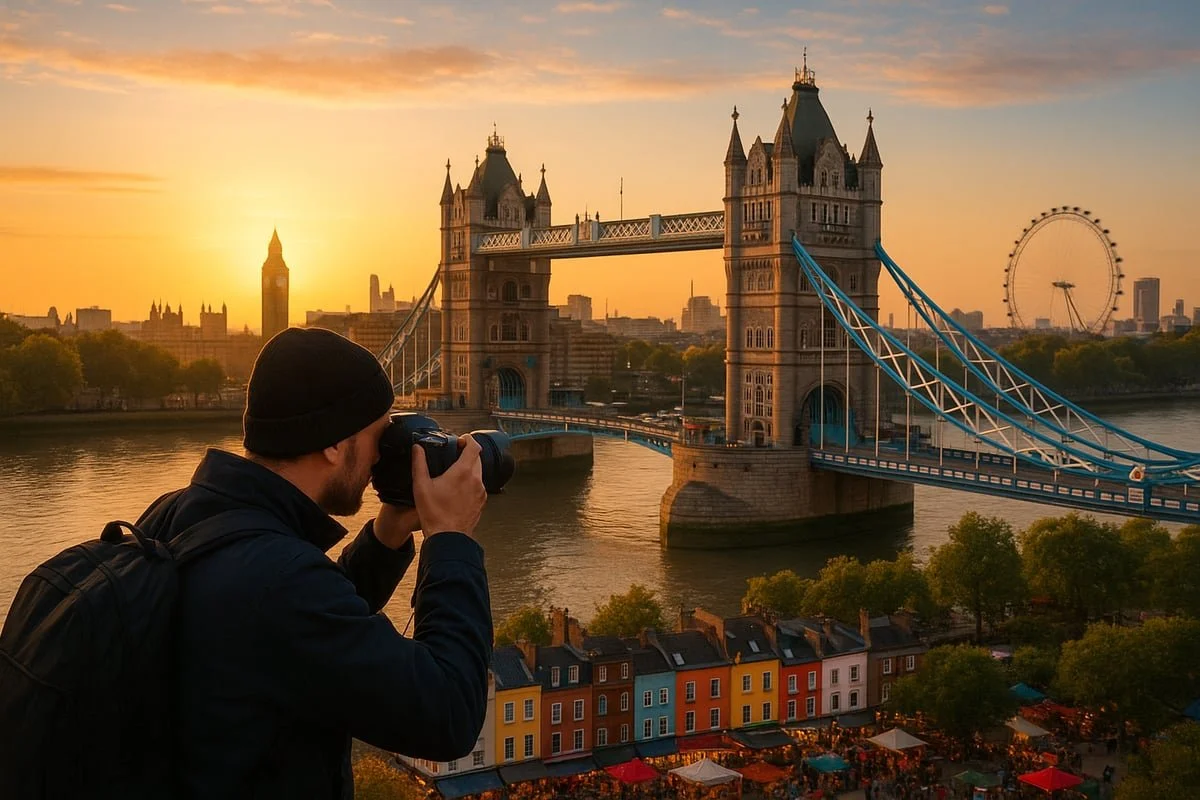
For a london photographer, classic landmarks are irresistible. Big Ben’s iconic clock face and the grandeur of Buckingham Palace demand thoughtful framing. To stand out, experiment with angles—shoot Big Ben from Parliament Square for a dramatic perspective, or capture Tower Bridge from the south bank at sunrise for soft light and minimal crowds.
The Thames’ north bank offers panoramic views of the London Eye and Parliament, especially during blue hour. Use leading lines from Westminster Bridge to add depth, and try wide-angle lenses to capture the full scale.
Did you know London is a global leader in social media photography? According to recent statistics, the city’s landmarks have inspired over 157 million Instagram posts, making it a must-visit destination for any london photographer. For more insights on trending locations and subjects, see London's dominance in social media travel photography.
Colourful Neighbourhoods and Markets
London’s vibrant neighbourhoods offer a feast for the senses. Notting Hill’s pastel townhouses and the bustle of Portobello Road Market are perfect for any london photographer seeking colour and character. Early mornings provide soft light and fewer crowds, ideal for capturing the iconic facades.
In Shoreditch, bold street art and graffiti walls create dynamic backgrounds for portraits or urban scenes. Camden Market, with its eclectic stalls and candid moments, is a hotspot for spontaneous street photography. Look for unique compositions in side alleys and market corners.
Urban Greenspaces and Tranquil Corners
Green spaces are essential for a london photographer aiming to showcase the city’s natural beauty. Hyde Park and St. James’s Park offer serene lakes, tree-lined paths, and opportunities to photograph wildlife. Visit at dawn to catch morning mist or at sunset for golden backdrops.
For something more atmospheric, St. Dunstan in the East Church Garden blends ancient ruins with thriving greenery, creating ethereal, almost otherworldly compositions. Hampstead Heath provides sweeping city views and woodland trails, perfect for landscape shots or contemplative portraits.
Modern Architecture and Cityscapes
London’s skyline is a playground for any london photographer interested in contemporary design. The Shard and the Gherkin are standout subjects, with their sleek glass facades reflecting the changing sky. Position yourself at London Bridge or More London for striking views of the City’s skyscrapers.
In Canary Wharf, symmetry and reflective surfaces abound. Seek out puddles after rain for creative mirror shots, or use the geometric lines of the buildings to frame your subjects. For shooting glass and steel, a polarising filter helps control reflections and enhances contrast.
Off-the-Beaten-Path: Local Favourites
Some of the best images come from places less travelled. Leadenhall Market’s ornate Victorian architecture provides dramatic arches and light patterns, a delight for the observant london photographer. Neal’s Yard in Covent Garden, with its kaleidoscope of colours, is a hidden gem for vibrant street scenes.
Top-rated photographers often recommend exploring London’s side streets. These quieter areas reveal authentic moments, from local shops to unexpected murals. In fact, 40% of professionals cite side streets as their favourite spots for unique images.
Seasonal and Event-Based Opportunities
Seasonal changes transform London’s visual landscape. During December, Oxford and Regent Street dazzle with Christmas lights, offering a magical backdrop for night photography. Summer brings festivals and parades, with Notting Hill Carnival standing out as a highlight for dynamic portraits and street scenes.
Events give a london photographer the chance to capture the city’s diversity and energy. Arrive early to scout your location, anticipate movement, and use fast shutter speeds to freeze action. Each season and celebration presents fresh perspectives and stories to document.
Step-by-Step Guide: Shooting Stunning Photos in London
Mastering the art of being a successful london photographer in the capital requires a thoughtful approach. Each phase, from planning to post-processing, can elevate your images from ordinary to outstanding. This step-by-step guide breaks down the process, helping you achieve professional results in any London setting.
Step 1: Research and Scouting
Every successful london photographer knows that preparation is essential. Start by gathering inspiration from Instagram, Google Maps, and local photography blogs. Look for unique perspectives and identify times when light and crowds are most favourable.
Visit your chosen locations ahead of time to assess angles and accessibility. Scouting at different hours will reveal how the atmosphere changes, helping you plan for the best lighting conditions and quieter moments. Many professionals in London even make a habit of visiting spots the day before a shoot to anticipate any surprises.
Use mobile apps to save reference images and location notes.
Plan your route to maximise time and energy.
Take test shots to evaluate framing and exposure.
Step 2: Setting Up for the Shot
When you arrive on location, a london photographer should quickly assess the environment. Choose the right focal length based on your subject: wide angles for cityscapes, standard or short telephoto for portraits and street scenes.
Experiment with different compositions. Leading lines, such as bridges or streets, can guide the viewer's eye and add depth. Balance your foreground and background to create images with strong visual impact.
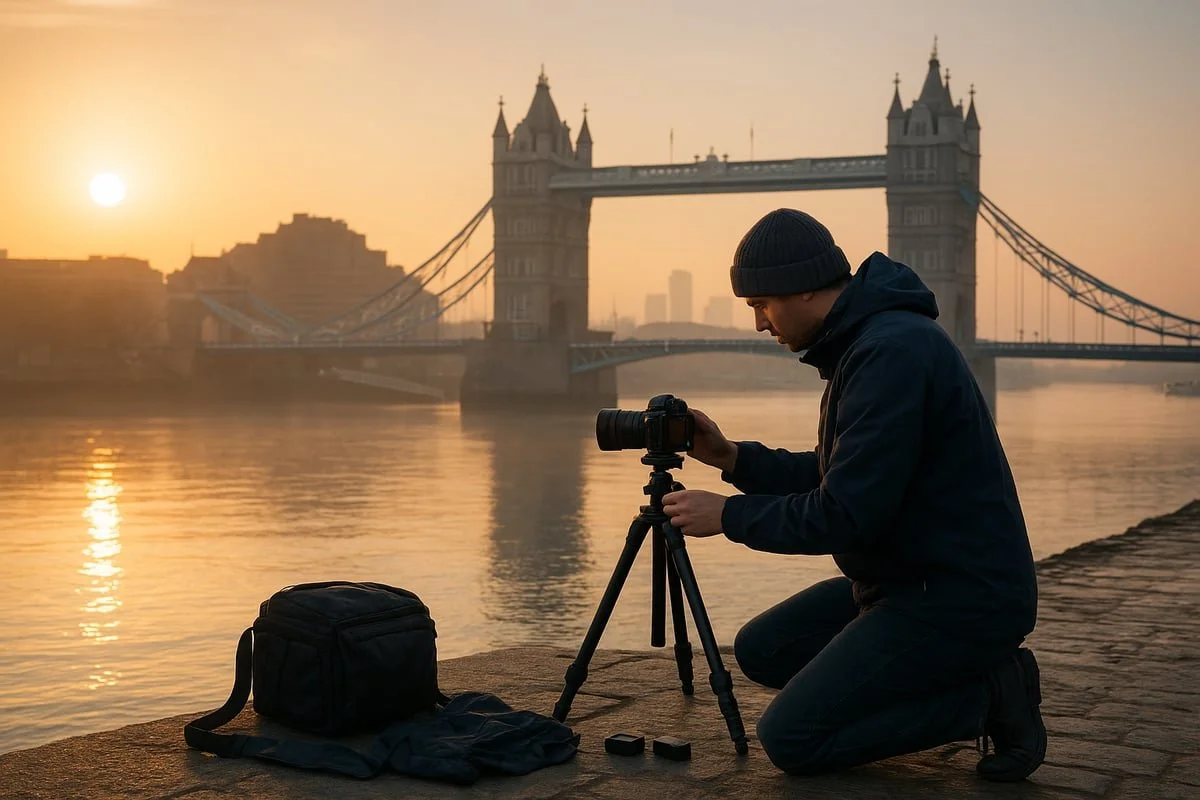
Adjust your tripod for stability, especially in low light.
Use the rule of thirds or symmetry to frame your shot.
Watch for distracting elements and reposition as needed.
Step 3: Mastering Light and Exposure
London’s weather can shift rapidly, so a london photographer must adapt to changing conditions. Manual settings provide the most control, especially when dealing with overcast skies or dramatic sunlight.
Use reflectors or portable lighting to illuminate subjects during portrait sessions. For night scenes or riverfront shots, try long exposure techniques to capture light trails and reflections. Always check your histogram to avoid blown highlights or deep shadows.
Set ISO low for crisp cityscapes, higher for evening events.
Use ND filters for balanced exposures in bright conditions.
Bracket exposures when shooting high-contrast scenes.
Step 4: Capturing Authentic Moments
To truly stand out as a london photographer, focus on capturing genuine interactions and emotions. Decide when to blend into the background for candid shots and when to direct your subject for posed portraits.
Engage with your subjects to build rapport and encourage natural expressions. For street and event photography, timing is everything. Anticipate moments and be ready to press the shutter at just the right instant.
For further advice on spontaneous, real-life images, explore Candid Photography Techniques to refine your skills.
Observe body language and reactions.
Use continuous shooting mode for dynamic scenes.
Respect privacy and always ask permission when possible.
Step 5: Reviewing and Refining On Location
A disciplined london photographer reviews images on-site to ensure quality and consistency. After each set, check for sharpness, correct exposure, and any unwanted distractions in the frame.
Be prepared to make quick adjustments as weather shifts or crowds move. This proactive approach helps avoid missed opportunities and ensures your final gallery meets professional standards.
Zoom in on your LCD to inspect details.
Adjust white balance for changing light.
Recompose shots if key elements are missing or obstructed.
Step 6: Post-Processing Tips for London Images
Editing is where a london photographer can truly bring out the essence of their shots. Enhance contrast and vibrancy to counter London’s grey skies. Remove distractions and correct perspective for architectural accuracy.
Use editing software like Lightroom, Capture One, or Snapseed for mobile edits. Experiment with colour grading, black-and-white conversions, or selective adjustments to create your signature style.
Remember to export images at high resolution for print or web display, and always back up your files securely.
Creative Techniques for Unforgettable London Shots
Unlocking creativity is what separates a good london photographer from a truly exceptional one. London’s dynamic cityscape offers endless opportunities to experiment, evolve your style, and push boundaries. For a deeper dive into how creative vision has shaped photography, see The Story of Photography.
Playing with Perspective and Scale
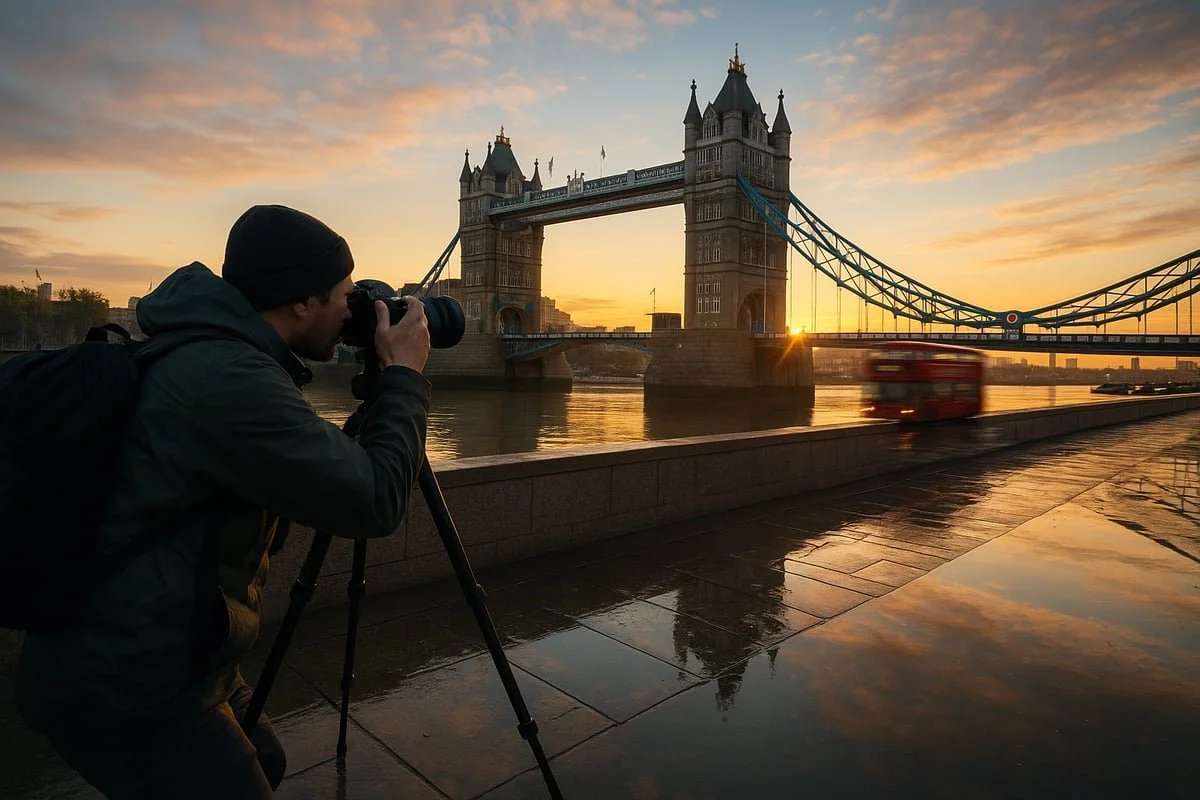
Perspective is a powerful tool for any london photographer. By shifting your viewpoint, you can transform an ordinary scene into something extraordinary. Try shooting from ground level to exaggerate the height of landmarks, or find a rooftop for sweeping cityscapes. Wide-angle lenses are perfect for immersive shots, making buildings seem more imposing and streets more expansive. Incorporate foreground elements, like a passing cyclist or a classic London taxi, to add scale and context. Experimenting with perspective invites viewers to experience the city as you see it.
Incorporating Motion and Energy
Capturing London’s energy is essential for the london photographer seeking dynamic images. Use a slow shutter speed to blur crowds on Oxford Street or create striking light trails from red buses at night. Panning is another effective technique—track a moving subject while using a slower shutter, keeping them sharp against a blurred background. This approach adds excitement and movement, telling the story of a city that never stands still. Experiment with different speeds and locations to find what best captures London’s pulse.
Storytelling Through Details
For the london photographer, storytelling often lies in the details. Focus on unique features such as ornate door knockers in Notting Hill, the expressive hands of a busker, or vintage market signage. These close-ups evoke emotion and context, offering a glimpse into daily life. Candid moments at markets or festivals tell authentic stories. Seek out architectural flourishes and fleeting expressions. By highlighting the small, meaningful elements, you create images that resonate and linger in the viewer’s mind.
Using Reflections and Symmetry
Reflections and symmetry are visual tools that elevate a london photographer’s work. Look for puddles after rain, the glass façades of modern buildings, or the Thames itself. Position yourself to capture mirror-like effects, doubling the impact of famous landmarks. Seek out symmetrical compositions in classical facades or contemporary structures like the Shard. These techniques create balance and harmony, drawing the viewer’s eye deeper into the image. Patience and careful framing are key to mastering this creative approach.
Black-and-White and Moody Edits
A london photographer can harness black-and-white editing to add atmosphere and drama. London’s ever-changing weather, morning fog, and historic architecture lend themselves to high-contrast monochrome images. Convert scenes with strong lines or dramatic skies for maximum impact. Moody edits work well on misty mornings or in shadowy alleyways. Adjust contrast and clarity to highlight textures and shapes. Black-and-white photography tells timeless stories, stripping away distractions and focusing the viewer’s attention on composition and emotion.
Experimenting with Colour
Colour is central to the creative toolkit of a london photographer. London’s street art, vibrant markets, and eclectic neighbourhoods are perfect subjects for bold colour photography. Use saturation carefully to enhance, not overwhelm, your images. Try selective colour techniques in post-processing to draw attention to key subjects, such as a red phone box or pastel houses in Notting Hill. Embrace both subtle and vivid palettes to convey mood and character. Colour experimentation helps your portfolio stand out.
Working with People: Portrait and Event Photography in London
Capturing people amidst London’s vibrant backdrop is a rewarding challenge for any london photographer. The city’s diverse streets, iconic landmarks, and unique communities offer endless opportunities for portraits and events. Whether you are working with individuals, families, or large groups, mastering your approach is essential for authentic, memorable results.
Approaching Street and Environmental Portraits
Street and environmental portraits in London thrive on connection and context. As a london photographer, always seek consent before photographing people, especially in close settings. Building rapport can be as simple as a friendly introduction or sharing your vision for the shot.
Natural backdrops, such as Notting Hill’s pastel terraces or bustling markets, add narrative depth to portraits. Positioning your subject against these iconic settings helps convey both personality and place. For more tips on planning location-based sessions, explore Pre-Wedding Photoshoot Insights, which offers guidance on capturing authentic moments in London’s most photogenic spots.
Family and Group Sessions in Iconic Settings
Photographing families and groups at London landmarks requires both creativity and patience. Early mornings are ideal for avoiding crowds and harnessing soft, flattering light. A london photographer should guide groups with gentle posing suggestions, encouraging natural interactions rather than stiff arrangements.
Choose locations like St James’s Park or Tower Bridge for their spaciousness and iconic views. To manage distractions, keep sessions lively and brief, especially with children. For more insight into working with families in dynamic environments, see Family Documentary Photography Tips.
Event Photography: Capturing London’s Diversity
London’s events, from weddings to city festivals, demand a flexible approach. A london photographer balances candid storytelling with essential posed shots. During weddings, blending into the background helps document genuine emotions, while festivals call for anticipation and quick reactions.
Professional event photographers typically deliver edited galleries within five days, reflecting the city’s fast-paced expectations and high standards. Preparation is key, so always scout venues in advance and pack backup equipment for seamless coverage.
Navigating Cultural Sensitivities and Etiquette
Respect is paramount when working as a london photographer in such a multicultural city. Always be mindful of local customs, especially during weddings or religious celebrations. Some communities may prefer privacy, so clarify intentions and seek permission before photographing.
In public spaces, follow posted guidelines and avoid obstructing pathways or disturbing events. A respectful approach fosters trust and opens doors to more authentic photographic opportunities.
Insider Tips from London Pros
Experienced london photographer professionals recommend making subjects feel at ease through conversation and encouragement. Suggest simple movements, such as walking or laughing together, to evoke natural expressions.
Clients consistently praise photographers who capture genuine moments over staged poses. Remember, the best portraits reflect both the character of the subject and the spirit of London itself. Authenticity, empathy, and attention to detail set outstanding work apart.
London Photography Etiquette, Safety, and Legal Essentials
Navigating the vibrant streets of London with your camera is exhilarating, but every london photographer must balance creativity with respect for the city’s rules. Understanding etiquette, safety, and legal essentials will ensure your photography experience is both enjoyable and responsible.
Respecting Privacy and Public Spaces
As a london photographer, you must always respect the privacy of individuals, especially in residential areas or sensitive locations. Before photographing people, particularly children, seek verbal consent whenever possible.
Some markets, parks, and privately owned spaces restrict professional shoots or the use of tripods. Always check for signage or ask staff if unsure. For commercial work, obtain written permission from property owners or managers. Remember, your conduct reflects the wider photography community.
Safety Tips for Urban Shoots
Protecting your gear and personal safety is vital for any london photographer. Use discreet camera bags and keep equipment close to avoid attracting unwanted attention in crowded spots.
Stay alert, especially at night or in less busy areas. Work with a friend when possible. Invest in specialist insurance to cover valuable equipment and public liability. Many professionals also use tracking devices on their bags for added security.
Understanding Permits and Permissions
Not all locations in London are free to shoot commercially. Iconic sites like Tower Bridge, Trafalgar Square, and some royal parks require advance permits for professional or large-scale shoots.
To apply, visit the location’s official website for guidelines and fees. For personal projects, most public spaces allow photography, but always check local rules. Keep digital copies of permits on your phone in case you are asked for proof on site.
Drone and Aerial Photography Regulations
Drone use is heavily restricted for any london photographer in central areas. The UK Civil Aviation Authority enforces strict rules, including no-fly zones near airports, government buildings, and crowded events.
Before flying, consult the CAA map and register your drone. For advice on photographing buildings and public art legally, review the Freedom of panorama in the UK guidelines. Only a small percentage of local professionals use drones due to these regulations.
Environmental Responsibility
Every london photographer should practise leave-no-trace principles, especially in parks and green spaces. Avoid disturbing wildlife, trampling flower beds, or blocking pathways with tripods and lighting equipment.
Keep noise to a minimum and be considerate of other visitors. When photographing events or parades, stay within designated areas and dispose of rubbish responsibly.
Staying Updated on Local Laws
Photography laws can change quickly, so it is crucial for any london photographer to stay informed. Use reputable resources such as local council websites, photography forums, and community groups to track updates on permits and restrictions.
Sign up for newsletters or alerts from relevant authorities. This proactive approach helps you avoid fines and ensures your work remains compliant with the latest regulations.
Whether you’re inspired to explore London’s iconic landmarks or keen to uncover its hidden gems, you now have the tools and insider knowledge to capture truly memorable moments. If you’re dreaming of stunning images that tell your unique story—whether it’s an engagement, wedding, or simply a day out in the city—I’d love to help make those memories last. Feel free to check out our services to see how we can work together to create photographs you’ll cherish for years to come. Your London adventure deserves to be remembered beautifully.