
Black Tie Photography Guide: Master Elegance in 2026
Step into a world where elegance defines every moment. Black tie events set the standard for sophistication, and black tie photography ensures these memories are preserved with all their grandeur.
As demand for luxurious celebrations grows, capturing the essence of these occasions requires more than just technical skill. This guide will empower photographers, event planners, and couples to master black tie photography in 2026, guaranteeing every image radiates style and class.
Discover expert strategies, creative inspiration, and technical insights tailored to today’s black tie scene. Ready to elevate your event imagery? Let’s explore the history, etiquette, style, technical setup, creative direction, editing, and trends shaping the art of black tie photography for the year ahead.
The Essence of Black Tie: History, Etiquette, and Visual Impact
Black tie photography is rooted in the pursuit of capturing sophistication at its peak. This style revolves around more than just capturing formal attire. It embodies a tradition of elegance, ceremony, and timeless visual storytelling. Understanding the essence of black tie is essential for anyone aiming to elevate their event imagery in 2026.
Defining Black Tie: Tradition Meets Modern Flair
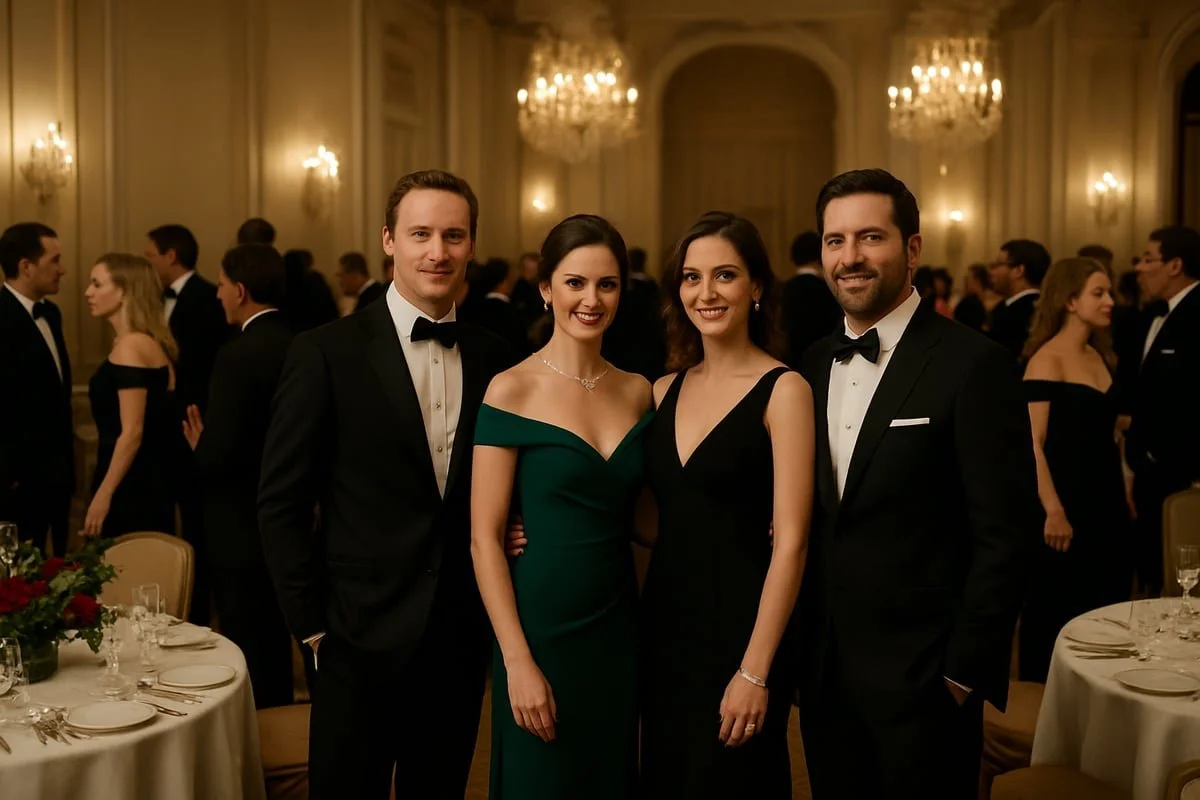
Classic black tie attire for men typically includes a dinner jacket, black trousers with a satin stripe, a crisp white shirt, a black silk bow tie, and polished patent shoes. For women, floor-length evening gowns or elegant cocktail dresses are customary. While tradition remains strong, modern interpretations have emerged. For example, coloured dinner jackets or velvet textures now appear at high-profile events.
The roots of black tie photography can be traced to early 20th-century soirées, where the dress code signalled exclusivity and celebration. Over time, black tie has grown to feature at not only royal galas and charity balls, but also luxury weddings and celebrity events. This evolution has shaped how photographers approach these occasions, blending tradition with contemporary flair.
Etiquette and Timeless Traditions
Knowing when black tie is appropriate is vital for both hosts and photographers. Typically, this dress code is reserved for evening events, such as formal weddings, awards ceremonies, and charity galas. Guests expect a level of formality, with invitations and timelines often reflecting the grandeur of the occasion.
Etiquette also influences the approach to black tie photography. Photographers must respect the event’s structure, capturing key moments without disrupting the flow. Understanding the expectations of both hosts and guests ensures images that reflect the event's dignity and style. In the UK, traditions blend with individual preferences, sometimes specifying black tie for the entire guest list or just for the bridal party.
Visual Impact: Monochrome, Contrast, and Editorial Style
The visual hallmark of black tie photography lies in its sharp contrasts and clean lines. Black and white dominate the palette, creating a striking effect in group portraits and candid shots. However, this can pose challenges in maintaining vibrancy and avoiding a flat, monochrome appearance.
To overcome these challenges, subtle injections of colour through bouquets, accessories, or décor are increasingly popular. These touches not only break up the uniformity but also add depth and interest to images. For those seeking inspiration in editorial techniques that enhance sophistication, magazine style wedding photography offers valuable insights into creating images that feel both classic and contemporary.
Modern Influences, Global Trends, and the Power of Colour
The influence of American and British traditions continues to shape black tie photography in the UK. Social media platforms like Instagram have accelerated the adoption of global trends, encouraging couples and planners to blend classic elements with bold, personal touches. Recent years have seen a surge in black tie weddings across the UK, with Sally Rawlins Photography noting a significant increase in 2024.
Colour is playing a more prominent role, moving beyond the sea of black and white. For instance, Prince Harry’s black velvet dinner jacket at a royal event showcased a modern twist on tradition, inspiring many to experiment with fabrics and hues. This blend of old and new ensures that black tie photography remains dynamic and relevant, capturing the true spirit of contemporary elegance.
Planning for Black Tie Photography: Preparation and Communication
Careful planning is the foundation of successful black tie photography. Clear communication and thoughtful preparation ensure every elegant detail is captured, from the attire to the ambience. By collaborating closely with clients and event teams, photographers can anticipate both the challenges and the creative opportunities unique to formal occasions.
Understanding Client Vision and Event Aesthetics
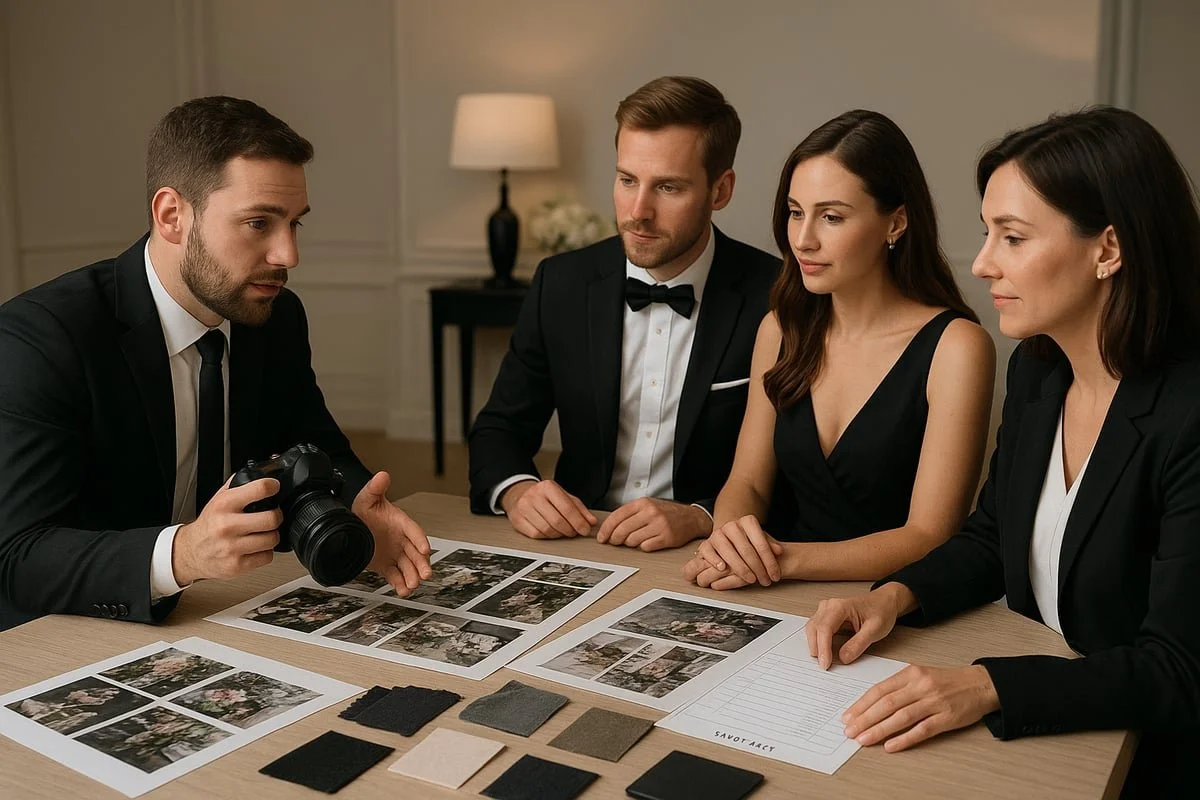
Every black tie photography commission begins with a deep dive into the client’s vision. Pre-event consultations are essential for aligning on the desired style, mood, and must-have moments. Photographers should ask about the level of dress code adherence: will all guests embrace black tie, or is it limited to the wedding party? This shapes the overall visual narrative.
Communicating expectations early, especially regarding invitations and timelines, is vital. Guests need ample notice—ideally six months—to secure suitable attire. This not only maintains the event’s formality but also influences the ease of capturing cohesive, stylish images.
Venue selection is another critical factor in black tie photography. The lighting, backdrop, and overall setting dictate technical choices and creative direction. For instance, a midday pub wedding brings natural light and a relaxed mood, while an evening ballroom affair demands precision with artificial lighting and a focus on glamour.
By understanding these elements, photographers can tailor their approach and ensure that every aspect of the event harmonises with the sophisticated ethos of black tie photography.
Building the Shot List and Timeline
A well-structured shot list is at the heart of exceptional black tie photography. Essential moments include guest arrivals, group portraits, candid interactions, dance floor scenes, and detail shots of accessories like cufflinks and shoes. Balancing posed images with spontaneous, documentary-style photographs creates a gallery that feels both polished and authentic.
Managing group photos in a formal context requires skill. Rather than static, stiff arrangements, use dynamic compositions and gentle direction to relax subjects. Incorporate colour through bouquets, décor, or standout accessories to prevent images from feeling flat—a pop of colour in floral arrangements can transform group portraits and add vibrancy.
Collaboration with event planners and stylists ensures seamless execution. Share the shot list and timeline in advance to coordinate key moments and avoid missed opportunities. Always prepare backup plans for unpredictable lighting or weather, carrying portable lighting or scouting sheltered locations as needed.
A practical approach is to blend formal and candid techniques. For inspiration on achieving this balance, see these posed and candid photography tips.
By meticulously planning every element, photographers can ensure their black tie photography not only meets but exceeds client expectations, delivering a collection that radiates timeless sophistication.
Technical Mastery: Camera Setup, Lighting, and Composition for Elegance
Achieving the signature elegance of black tie photography demands more than a sharp eye. It requires a technical approach that adapts to the unique challenges posed by formal events. Every decision, from gear selection to lighting and composition, shapes the sophisticated atmosphere captured in each frame.
Camera Gear and Settings for Black Tie Events
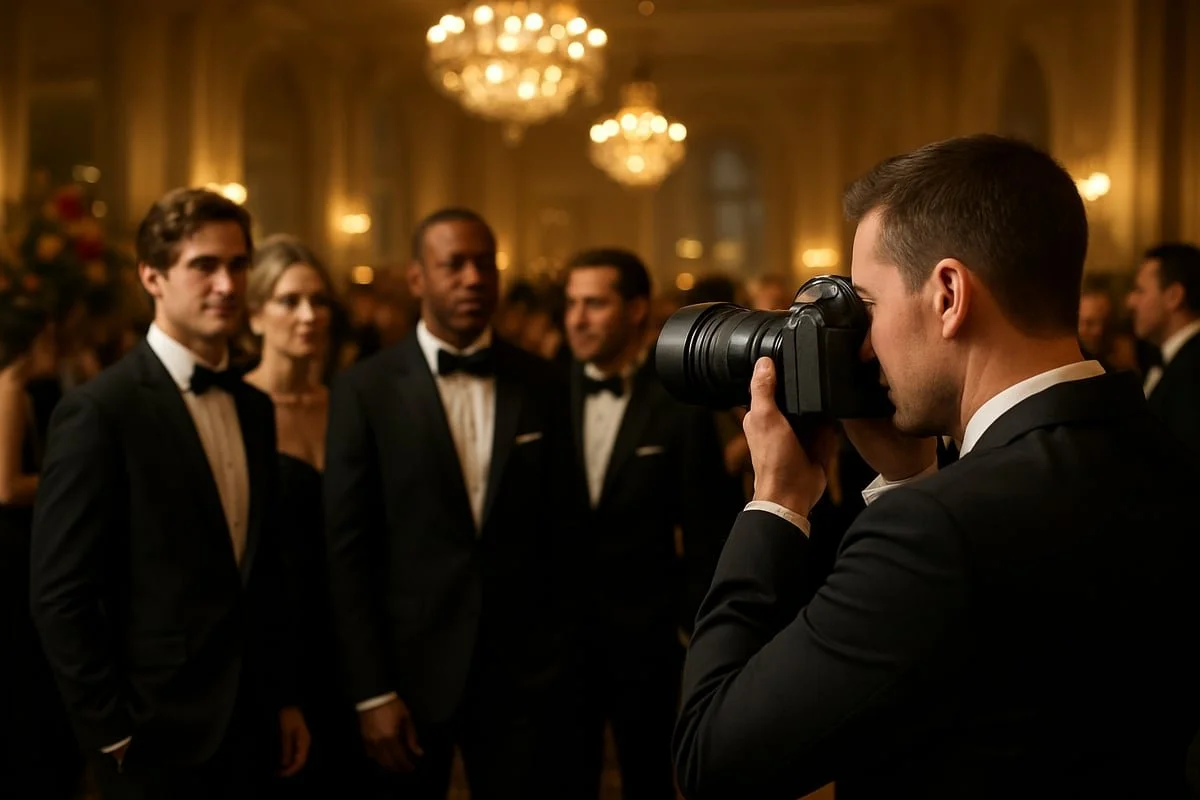
Selecting the right equipment is foundational for black tie photography. Full-frame DSLRs or mirrorless cameras offer superior low-light performance, essential for dimly lit venues. Pair your camera with fast prime lenses, such as a 50mm f/1.4, for intimate portraits or a 24-70mm zoom for versatile group coverage.
Key settings include:
ISO: Start low for image clarity, but don’t hesitate to push ISO up to 3200 or 6400 if needed. Modern sensors handle noise well, preserving the refined look expected from black tie photography.
Aperture: Wide apertures (f/1.4–f/2.8) create dreamy background blur, highlighting subjects and adding a sense of depth.
Shutter Speed: Maintain at least 1/125s for sharpness, especially during movement on dance floors or candid interactions.
Focusing is a particular challenge, as dark fabrics can confuse autofocus. Use single-point AF and aim for well-lit faces or eyes. Always bring backup bodies, lenses, and batteries. Black tie photography leaves no room for technical mishaps.
For example, a dual setup with a 50mm f/1.4 for portraits and a 24-70mm for groups ensures you are prepared for every scenario. This combination balances flexibility and quality, key for capturing the full spectrum of moments at a black tie event.
Lighting Black Tie Events: Challenges and Solutions
Lighting is often the defining factor in black tie photography. Venues tend to be dimly lit, with chandeliers or candles creating beautiful ambience but posing exposure challenges. On-camera and off-camera flashes are vital tools, but must be used thoughtfully to maintain a natural, flattering look.
Consider these lighting techniques:
Ambient Light: Use it wherever possible to preserve the mood. Raise ISO carefully to avoid noise.
Flash: Bounce flash off ceilings or walls to soften shadows and avoid harsh highlights on tuxedos or satin dresses.
LED Panels: Portable LEDs offer continuous, adjustable light, perfect for detail shots or low-light portraits.
Diffusers: These help spread light evenly, preventing shiny reflections on formal wear.
Creative lighting, such as uplighting and spotlights, can enhance the elegance of your compositions. Control exposure to avoid overblown whites, particularly with wedding dresses or crisp white shirts.
Lighting trends for 2026 emphasise cinematic effects and subtle use of bold colours in luxury events. For more inspiration on how lighting and style are evolving in high-end occasions, see 2026 Luxury Wedding Photography Trends.
Mobile studio setups and instant print stations are increasingly popular, allowing photographers to deliver polished, shareable images on the spot. These innovations set a new standard for black tie photography, blending classic style with modern technology.
Composition Techniques for Timeless Sophistication
The composition of your images is what ultimately defines the artistry of black tie photography. Focus on clean lines, symmetry, and the interplay between black and white tones to create a sense of luxury.
Effective techniques include:
Leading Lines and Symmetry: Use architectural features or group arrangements to guide the viewer’s eye.
Negative Space: Give your subjects room to breathe, which enhances the sense of occasion.
Posing: Direct individuals and groups into relaxed yet polished stances. Avoid stiffness by encouraging natural interaction, laughter, or movement.
Candid Shots: Blend into the event, using a documentary approach to catch genuine moments of connection and celebration.
Managing contrast is crucial. Avoid areas where black attire merges into dark backgrounds, creating “black holes.” Instead, position subjects where light can sculpt their features and clothing. Close-ups of unique details, such as velvet lapels or statement accessories, add visual interest and tell the story of the event’s style.
Mastering these compositional choices ensures every image in your black tie photography gallery radiates refinement and timeless appeal.
Creative Direction: Styling, Colour, and Storytelling in Black Tie Photography
Black tie photography is about more than simply documenting formalwear. It is an exercise in transforming sophistication into visual poetry. Creative direction involves styling, colour, and narrative, all carefully woven together to elevate every image. Let us explore how to master these elements for truly timeless results.
Styling and Fashion Details that Elevate the Image
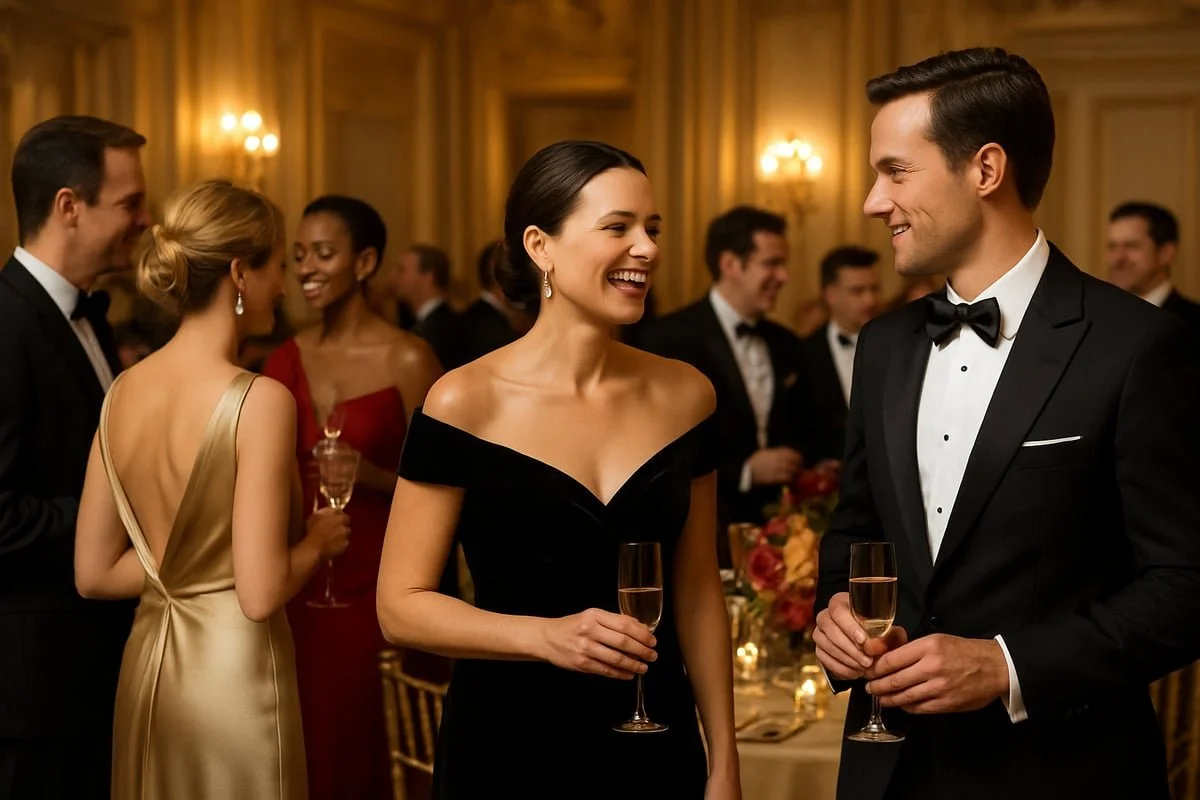
Attention to detail is the cornerstone of black tie photography. Classic wardrobe elements such as peak or shawl lapels, velvet and satin fabrics, and accessories like cummerbunds or patent shoes set the stage for visual impact. The interplay of black and white creates a striking canvas, but it is the subtle textures and tailoring that make each subject stand out.
Modern black tie photography embraces gender-neutral and contemporary interpretations. Think androgynous tailoring, coloured dinner jackets, or minimalist silhouettes. These choices allow for both tradition and individuality, offering a fresh take on timeless elegance.
For destination weddings, a white dinner jacket can evoke Old Hollywood glamour, while a green velvet jacket adds a memorable statement. By highlighting these details, black tie photography tells a story of both sophistication and personal style.
Injecting Colour and Personality
A common challenge in black tie photography is avoiding visual monotony. With so much black fabric in frame, images can risk appearing flat. Injecting colour and personality is essential for dynamic, memorable photos.
Strategic use of colour instantly elevates group shots and individual portraits. Incorporate vibrant bouquets, maroon or petrol blue velvet, or statement boutonnieres to break up monochrome. Even a subtle pop of colour in a pocket square or tie can transform the mood of an image.
Encourage clients to personalise their look. Suggest unique cufflinks, bold lipstick shades, or creative décor choices that complement the overall aesthetic. These touches not only add interest but also reflect the event's character and the couple's personality.
Use floral arrangements to introduce seasonal tones
Recommend coloured accessories to express individuality
Capture décor details that echo the event theme
By weaving these elements into your black tie photography, you create images that feel fresh, lively, and uniquely tailored to each celebration.
Storytelling: Capturing Emotion and Atmosphere
The true magic of black tie photography lies in its ability to tell a story. While formal portraits are important, it is the candid, documentary-style moments that capture the essence of the event. Focus on relationships, from shared laughter during speeches to the energy on the dance floor.
Blend into the crowd to document genuine interactions. Look for fleeting glances, spontaneous toasts, and emotional embraces. These moments bring warmth and authenticity to the refined setting of a black tie affair.
Creating a narrative flow is key. Start with the anticipation of getting ready, follow through the ceremony and formalities, and conclude with the celebratory atmosphere of the evening. For further inspiration on storytelling techniques, explore documentary style wedding photography to see how authentic moments can shine in black tie settings.
Remember, black tie photography is not just about posed perfection. It is about capturing the atmosphere, emotion, and connections that make every event unforgettable.
Post-Production: Editing, Retouching, and Delivering Black Tie Images
Post-production is where the magic of black tie photography truly comes alive. Every adjustment and retouch ensures your images embody the elegance, drama, and sophistication these events demand. The focus is on enhancing contrast, perfecting colour, and delivering a polished gallery that delights clients and guests alike.
Editing for Contrast and Clarity
Editing is crucial in black tie photography, especially when working with a palette dominated by black, white, and subtle tones. Start by enhancing contrast to make tuxedos and gowns stand out, but be careful not to lose detail in the shadows or highlights.
Use selective adjustments and curves to separate subjects from dark backgrounds. Pay close attention to white dresses or shirts to avoid overexposure. For inspiration on current editing aesthetics, explore 2026 Photo Editing Trends for Photographers, which highlights styles like vintage film and cinematic tones that can elevate black tie photography.
Colour Correction for Black Tie Imagery
Colour correction is essential for black tie photography, as dark attire can cast colour tints onto skin and surroundings. Balance skin tones carefully to ensure they appear natural against black fabrics.
Adjust white balance for each lighting scenario, particularly in venues with mixed lighting. Subtle tweaks in HSL (Hue, Saturation, Luminance) panels can help flowers, décor, or accessories pop, introducing vibrancy without overwhelming the classic look. This step keeps your black tie photography refined and visually engaging.
Retouching Challenges and Solutions
Retouching black tie photography presents unique challenges. Black fabrics can show every speck of lint, stray hair, or crease. Use spot healing and cloning tools to maintain a flawless appearance on suits and gowns.
Shiny surfaces, like patent shoes or satin lapels, may catch unwanted reflections. Gently reduce highlights and use dodge and burn techniques to even out tones. By addressing these details, your black tie photography remains polished and professional.
Creating a Signature Look
Consistency is key when delivering black tie photography collections. Develop a signature editing style that complements the formality of the event, whether you prefer a crisp monochrome finish or a soft, film-inspired palette.
Apply your chosen style across all images for a cohesive gallery, from grand group shots to intimate couple portraits. This approach ensures your black tie photography stands out and aligns with client expectations for timeless elegance.
Delivery, Instant Prints, and Social Media Optimisation
Efficient delivery is vital in black tie photography, as clients and guests increasingly expect quick, shareable results. Prepare high-resolution files for albums and prints, and optimise images for social media platforms.
Consider offering instant print stations at events, which provide guests with branded keepsakes and immediate gratification. This trend, seen at many UK black tie functions, adds a unique touch and reinforces the exclusivity of the occasion. Quick turnaround and quality presentation will make your black tie photography memorable and in demand.
Trends and Innovations in Black Tie Photography for 2026
The landscape of black tie photography is evolving rapidly in 2026, reflecting both technological advancements and cultural shifts. Today, capturing timeless elegance is only the beginning. Modern clients demand immersive experiences, instant sharing, and images that tell a unique story.
Immersive Experiences and Interactive Photo Booths
Immersive experiences are taking centre stage at black tie events. Green screen backdrops allow guests to be transported to glamorous settings, while themed sets and interactive photo booths provide memorable moments. Mobile studios and roaming photographers are now essential, enabling coverage at large-scale galas and capturing spontaneous interactions.
For those seeking bespoke, branded experiences, instant print stations and digital props offer a fresh twist. This shift makes black tie photography not just about documentation, but about guest engagement and entertainment.
Social Media Integration and Instant Sharing
Social media has transformed how black tie photography is consumed and shared. Live sharing kiosks and instant digital galleries allow guests to access their images within minutes, often during the event itself. Event hashtags and branded overlays create a sense of community and encourage real-time sharing.
This trend is reinforced by the growing demand for immediate, shareable images. According to industry insights, clients now expect seamless integration with their preferred platforms, making every photo an opportunity for connection and celebration.
AI-Powered Enhancements and Smart Galleries
Artificial intelligence is revolutionising black tie photography. Automated editing tools streamline workflows, ensuring consistent quality across hundreds of images. Smart galleries use facial recognition to tag guests, making it easy to locate specific shots within large albums.
For a deeper dive into how AI and storytelling are shaping the industry, explore these 2026 Photography Trends: Key Shifts from 2025. These innovations help photographers deliver polished, personalised collections that capture the sophistication and emotion of the occasion.
Sustainability and Inclusivity in Black Tie Imagery
Sustainability is becoming a priority for black tie photography. Eco-friendly printing solutions, such as recycled paper and reusable décor, are now in vogue. Diverse representation is also gaining prominence, with photographers showcasing a broader range of couples, attire, and traditions.
This inclusive approach not only reflects societal values but also enriches the visual narrative of black tie events. Clients appreciate images that celebrate individuality and environmental responsibility.
Fashion-Forward Black Tie: Colour, Accessories, and Style
2026 is witnessing a bold shift in black tie fashion. Vibrant hues, statement accessories, and non-traditional attire are redefining the classic look. Couples and guests are moving beyond the traditional black and white palette, injecting personality through coloured dinner jackets, unique textures, and creative styling.
Wedding experts note a decline in strictly monochrome palettes, highlighting a move towards more expressive choices. For inspiration on how these changes are being embraced, see 2026 Wedding Trends: What's Out According to Wedding Planners and Experts.
In summary, black tie photography in 2026 is about more than technical mastery. It is a blend of innovation, personalisation, and artistry, ensuring every event is captured in a way that feels both timeless and distinctly modern.
Case Studies and Iconic Examples: Learning from Real Black Tie Events
Every memorable black tie photography project tells a unique story. Analysing real events reveals what elevates an image from simply formal to truly iconic. Let us explore how the best in the industry achieve this level of excellence.
Standout Black Tie Weddings and Galas
Successful black tie photography at weddings and galas relies on meticulous preparation. Photographers often scout the venue in advance, planning for lighting challenges and background options. For example, a recent London charity ball featured crisp group portraits in front of a grand staircase, making the most of architectural lines.
Attention to timing also plays a role. Capturing arrivals, toasts, and the first dance ensures the event’s narrative is preserved. These well-planned shots anchor the album and set the tone for the entire gallery.
Transforming Galleries with Colour and Lighting
Strategic use of colour and lighting can entirely transform black tie photography. Adding vibrant bouquets or coloured lighting to a monochrome scene creates depth and draws the viewer’s eye. Before-and-after comparisons often show how a carefully placed accent, such as a bold boutonniere or illuminated backdrop, elevates the mood.
For inspiration on classic and modern couple portraits, review these bride and groom photo ideas, which demonstrate how creative posing and thoughtful details produce standout images for black tie occasions.
Celebrity and Red Carpet Inspiration
Red carpet events and royal weddings have shaped trends in black tie photography. Photographers study celebrity arrivals for cues on posing, lighting, and composition. The iconic image of Prince Harry in a black velvet dinner jacket, for instance, influenced modern formalwear choices and client expectations.
These high-profile occasions reinforce the importance of capturing both grandeur and genuine emotion. The blend of glamour and authenticity is now a hallmark of the genre.
Lessons from Professional Portfolios
Reviewing the work of top professionals, such as Sally Rawlins and Photo8, highlights the value of innovation. Sally Rawlins’ portfolio demonstrates how subtle colour in floral arrangements enlivens group shots. Photo8’s instant print stations, meanwhile, provide guests with immediate keepsakes, enhancing the event experience.
Photographers who adapt their style, embrace new technology, and collaborate closely with planners consistently deliver exceptional results.
Client Feedback and Key Takeaways
Feedback from clients often centres on the impact of black tie photography in preserving precious memories. Guests appreciate images that balance elegance with spontaneity, capturing both posed moments and candid joy.
The most successful projects combine careful planning, creativity, and technical skill. When these elements align, the resulting photographs become treasured legacies for years to come.
As you’ve seen throughout this guide, mastering black tie photography is all about blending timeless style with authentic storytelling and technical know-how. Whether you’re planning your own elegant event or seeking to elevate your portfolio, the right approach makes all the difference. If you’d like to see how these principles come to life in real weddings, or you’re curious about how I can help capture your story with sophistication and ease, I invite you to check out our services. You’ll find options tailored for every vision—let’s make your next black tie occasion truly unforgettable.